


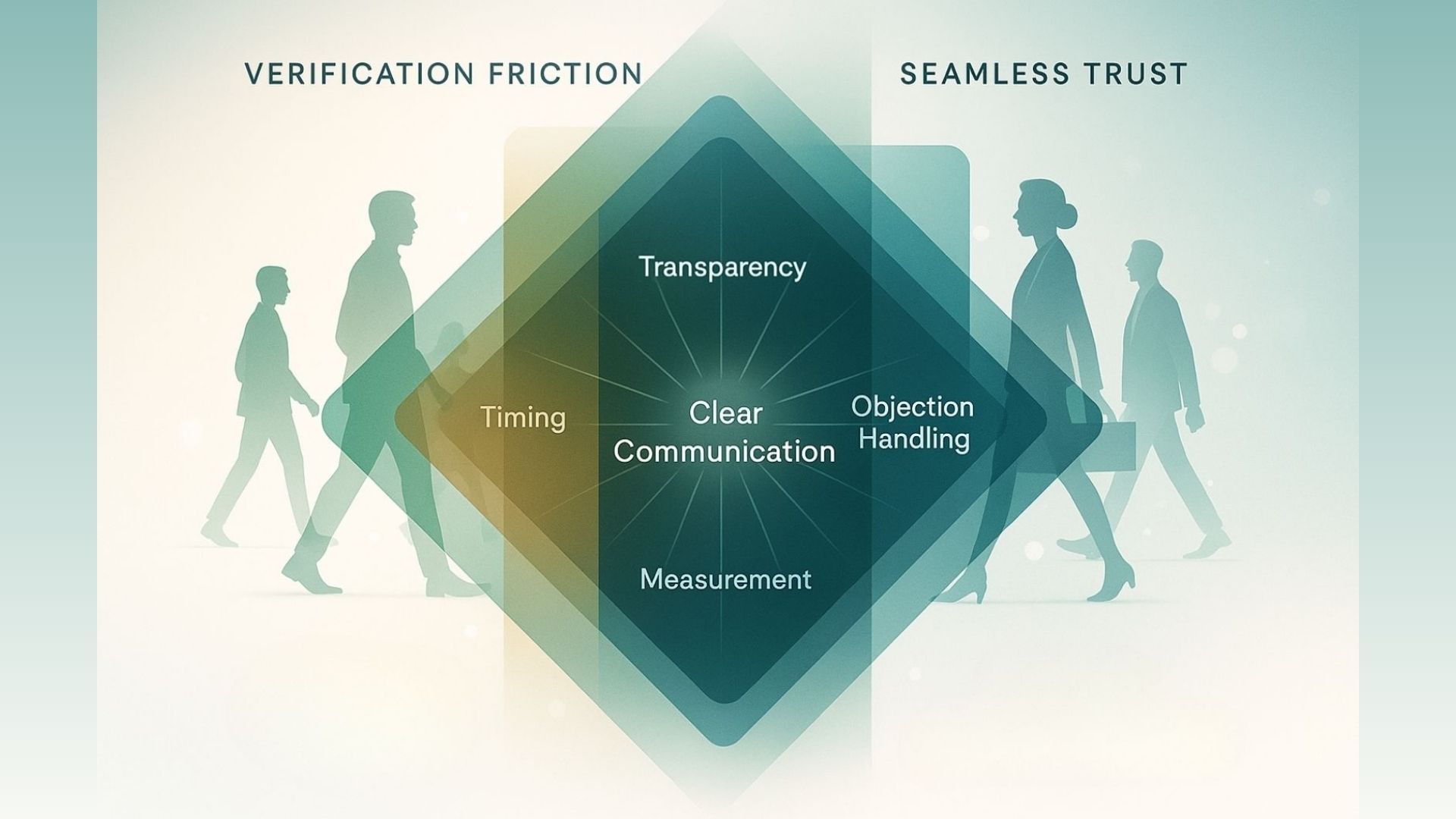
The hospitality industry faces a paradox. Security measures that should build trust often create friction instead. Guest verification, once a nice-to-have, has become essential, yet many operators hesitate to implement it, or implement it wrong. Tech platforms fail to educate their users on how to communicate properly to reach the desired outcomes, all fearing the same result: guests will abandon bookings, operators will resist adoption, and the entire experience will suffer.
But here’s what the data actually shows: this fear is misplaced. The real issue isn’t verification itself – it’s how verification is communicated.
The False Choice That Isn’t
Both tech vendors and operators often assume that adding verification to the booking process will create inevitable friction with guests. This assumption makes them hesitant to move forward with implementation. It’s understandable. It’s also based on a misconception.
This assumption stems from multiple factors working together. There’s natural resistance to change. There are historical poor implementations that prioritized security over user experience, creating a legacy of guest abandonment and operator resistance. There are intuitive concerns about whether extra steps cause guest abandonment. There are assumptions about human psychology and friction. And there’s growing awareness around privacy responsibility and data concerns that make both operators and tech vendors cautious about introducing verification requirements.
But here’s what separates the best-performing platforms from the rest: they’ve realized the real issue isn’t verification itself. It’s how it’s communicated.
Verification abandonment isn’t inherent to verification; it’s a symptom of unclear messaging, defensive framing, and lack of transparency about why verification matters. When guests encounter vague explanations or feel accused rather than protected, they abandon. When they encounter clear, professional communication that explains the mutual benefit, they complete verification at rates exceeding 95%.
The findings are clear: abandonment rates correlate with communication clarity, not security rigor. Platforms with transparent, proactive communication see dramatically higher completion rates, while those with vague or accusatory messaging see significant drop-off.
The real competitive advantage belongs to platforms that solve the communication problem. When verification is framed as a professional standard rather than a suspicious requirement, both operators and guests embrace it as a sign of a well-run platform. They win on both security AND retention, creating a virtuous cycle of trust and adoption.
The false choice between security and experience doesn’t actually exist. It’s a misconception born from poor communication, not from verification itself.
Security as Experience: Reframing the Narrative
Here’s a fundamental truth about human psychology: guests fundamentally want to trust. The human desire for safety and trust means guests are predisposed to appreciate verification when it’s framed correctly, not resist it.
The problem isn’t the desire for security. The problem is how that security is presented.
When guests understand why verification exists, how their data is used, and what protections are in place, they feel respected and protected rather than surveilled. Transparency builds confidence, not suspicion. A well-explained verification flow signals competence and care. A mysterious one triggers defensiveness and abandonment.
Consider the psychology at play. The primary reasons guests abandon digital processes include process complexity, documentation requirements, technical issues, and lack of trust. Notice what’s missing from that list? Verification itself. The friction comes from how the process is presented, not from the requirement to verify.
Language matters enormously. Compare these two approaches:
- “We verify everyone to ensure community safety” creates trust and normalizes the process
- “We need to verify you because…” creates suspicion and accusation
The first is professional and inclusive. The second is defensive and accusatory. The difference isn’t the security requirement; it’s the framing.
Transparency about data usage and privacy reduces objections significantly because guests feel informed and in control rather than having information extracted from them. Professional communication signals a professional operation, making verification feel like a sign of a trustworthy platform rather than a red flag.
Here’s where it gets interesting: rigorous verification actually increases guest confidence in the platform. When guests know fraud is being prevented and the community is protected, they trust the platform more, not less. They appreciate the professionalism. They’re more likely to book, leave positive reviews, and recommend the platform to others.
Guests appreciate verification when it’s framed as mutual protection, not accusation.
Understanding why communication matters is only half the battle. The real challenge is executing it consistently and effectively across all touchpoints. That’s where strategy becomes operational reality.
Communication Strategies That Work
Effective verification communication rests on four core pillars: timing, transparency, objection handling, and measurement. Here’s how to execute each one.

Timing & Proactivity: Set Expectations Early
The moment you communicate verification requirements matters. Setting clear expectations upfront – on the public listing, during initial inquiry, and throughout the booking journey – normalizes verification as a standard part of the process rather than a surprise requirement that feels accusatory. By communicating that verification happens post-booking as part of check-in, operators remove friction from the booking decision itself while ensuring committed guests understand what to expect. Tech platforms that provide this functionality and educate operators on its importance enable this clear communication, ensuring guests understand it’s how the platform operates, not a personal accusation.
The impact is real: proactive communication significantly reduces objections when guests know verification is coming and understand why it matters.
Transparency Over Justification: Lead with Purpose
Lead with what and why, not defensive reasons. Confident communication focuses on the purpose and process, not on why the guest might be suspicious or risky.
Be explicit about data handling and retention. Guests need to know exactly how their information is used, stored, protected, and for how long. This transparency eliminates the mystery that breeds distrust. Users must be aware of their rights and vigilant about possible privacy violations, and they should demand transparency and control over the handling of their data.
Personalization and engagement matter too. This isn’t just about compliance; it’s about making guests feel valued.
Handling Objections & Privacy Concerns: Know When to Flex, When to Hold
Not all resistance is created equal. Some objections come from genuine privacy concerns that deserve clear answers. Others come from guests with intent to defraud or cause harm and require a different approach.
Distinguish between legitimate privacy questions and bad-faith resistance. Provide clear answers about data security and compliance (SOC 2, GDPR, etc.). Operators need talking points and resources to address privacy concerns confidently and credibly.
Offer flexibility on how verification happens. Different verification tiers, alternative ID types, or streamlined processes for returning guests can address legitimate concerns while maintaining security standards. But know when to hold the line. Operators need clarity on which requirements are flexible and which are non-negotiable for their operational safety.
Strong legal frameworks exist in order to define clear limits on collection, storage, and use of personal information. This isn’t just a nice-to-have; it’s foundational to building trust.
Measuring Success: Data Drives Improvement
Track completion rates and guest satisfaction scores before and after verification implementation. This reveals whether poor communication, not verification itself, is the culprit. Identify communication breakdowns through support ticket analysis to reveal where guests are confused or resistant.
Use real feedback to continuously iterate on messaging. Guests who understand the verification process complete it 95% or more of the time, demonstrating that clarity is the primary driver of completion. Frame verification as a competitive advantage for properties to attract quality guests who value safety.
The best operators don’t just implement verification; they measure its impact and refine their approach based on data.
The Competitive Reality: This Is Happening Now
Verification has become table-stakes in hospitality tech. Guest screening, once a secondary consideration, is now an essential element for STR operators. Fraud, chargebacks, and safety concerns are pushing the industry toward verification as a baseline requirement, not a differentiator.
Operators who understand this and move early gain significant advantages in fraud prevention and guest trust. Advanced technologies are reshaping how hosts approach guest verification:
- AI-powered background checks providing instant access to criminal records, risk scores, and online reputation
- Global watchlist checks for sanctions, restricted individuals, and politically exposed persons becoming standard practice
- Biometric identity verification through facial recognition and liveness detection transforming the industry
Early adopters who embrace verification as a professional standard position themselves ahead of the curve. They build stronger communities, reduce fraud losses, and attract quality guests who value safety.
But here’s the critical piece: tech vendors have a responsibility to support this shift. Platforms that embed verification without providing operators with clear communication frameworks and best practices are setting their users up for friction and failure. Responsible vendors should educate and guide their users toward success.
The narrative shift from “necessary evil” to “professional standard” is already happening. Operators and platforms that lead this shift build stronger, more trustworthy communities.
Moving Forward: A Framework for Success
So what does this look like in practice? Here’s a framework for getting it right.
Start with an honest audit. Assess your current verification communication. Is it building trust or creating friction? Is it clear or defensive? Does it explain the mutual benefit or does it feel accusatory?
Develop a communication playbook. Operators need templates, talking points, and FAQs that address common objections so they can communicate confidently without reinventing the wheel. This isn’t a one-size-fits-all document; it should be flexible enough to adapt to different property types and guest segments.
Normalize verification as a platform standard from day one. Early, consistent messaging about verification as standard practice prevents it from feeling like a red flag later. Make it part of your onboarding narrative, not an afterthought.
Build feedback loops. Monitor completion rates, guest satisfaction, and support tickets. Use this data to continuously iterate on messaging and identify where communication breaks down. The best platforms treat verification communication as an ongoing optimization challenge, not a one-time implementation.
Learn from platforms that have perfected this. Years of data and real-world testing have shown what works and what doesn’t in verification communication. The industry benefits when this knowledge is shared and best practices are established.
Practical guest screening strategies rest on a few fundamentals worth reinforcing: setting clear expectations with guests upfront, knowing your guest through genuine engagement and conversation, confirming details to prevent issues, and understanding that even simple ID verification can deter problematic bookings because those with bad intent often won’t complete the process. These aren’t complex tactics – they’re foundational practices that, when combined with transparent communication, create a screening process that works.
The core insight that drives everything: security and experience aren’t trade-offs. They’re partners. When you communicate verification transparently and proactively, you strengthen both simultaneously.
