


Think about the last time you bought something online. You added the item to your cart, entered your credit card details, and clicked purchase. The payment gateway verified your card, the transaction was approved, and a few days later, the package arrived at your door.
In standard e-commerce, the transaction is essentially over the moment the payment clears.
Because many short-term rental booking engines are built on this exact same e-commerce architecture, property management companies often fall into the trap of applying e-commerce security rules to hospitality. They assume that a cleared payment means a secure transaction.
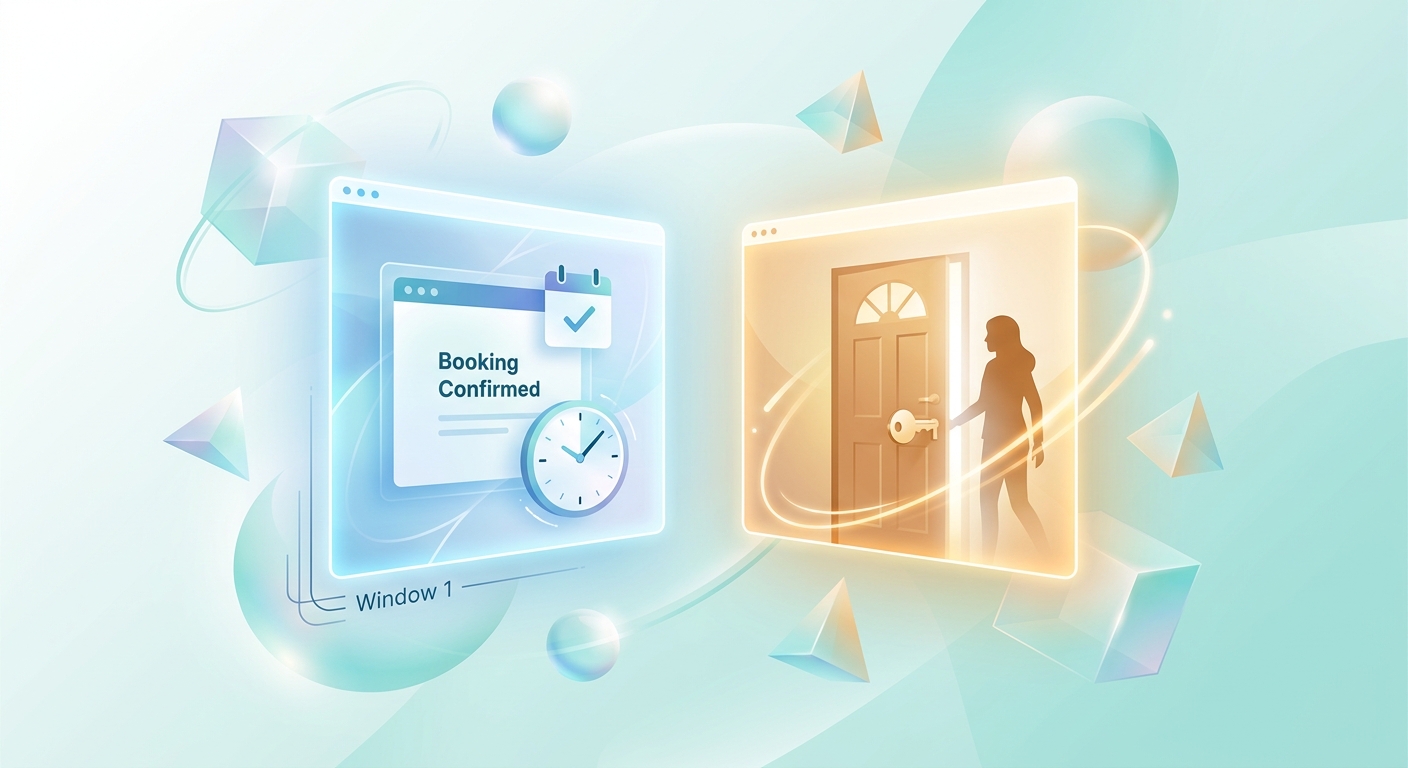
But booking a vacation rental is not like buying a standard retail product. In hospitality, a successful payment does not mean the transaction is safe. It simply opens “The Two Risk Windows” – two distinct, prolonged periods of vulnerability that standard payment gateways are completely blind to.
The E-Commerce Illusion: The Single Point of Risk
To understand why hospitality is so vulnerable, we have to look at how standard online retail works. E-commerce operates on a “single point of risk” model.
The entire security apparatus is concentrated at the exact moment of checkout. The merchant’s only goal is to ensure the credit card is valid and the funds are available before they ship the product. Once that shirt, laptop or purse leave the warehouse, the merchant’s risk drops to zero. They do not care what you do with the item, who uses it, or how you treat it. The fulfillment is immediate, and the relationship is over.
When PMCs rely solely on payment gateways like Stripe or Adyen, they are treating a $500,000 physical property like a disposable retail product. They are securing the checkout, but ignoring the massive timeline of risk that follows.
Risk Window 1: The Pre-Arrival Gap
The first major divergence from e-commerce is the time between payment authorization and physical check-in. This is the Pre-Arrival Gap, and it can last anywhere from a few hours to several months.
During this window, the payment processor has already done its job and gone to sleep. And unfortunately, this is often when the PMC goes to sleep, too. The moment the payment gateway flashes green, a dangerous psychological shift happens: the operator assumes the booking is legitimate and stops scrutinizing the reservation.
Fraudsters understand this dynamic perfectly. They know that a cleared payment buys them breathing room, and they actively exploit this window while the PMC’s eyes are no longer on them.
The Anatomy of a Pre-Arrival Exploit
Consider a fraudster who books a luxury downtown penthouse on a Tuesday for a Friday check-in using a stolen credit card. The payment clears instantly. During those three days of silence, the fraudster isn’t just waiting – they are actively preparing. While the operator thinks the booking is secure, bad actors use the Pre-Arrival Gap to execute their plans:
- Fabricating Identities: They generate fake IDs or synthetic documents that match the stolen credit card information, just in case the host asks for it closer to check-in.
- Coordinating Illicit Activity: With the location secured and the host looking the other way, they coordinate logistics for drug drops, sex trafficking, or other illegal activities.
- Planning Unauthorized Events: They sell tickets or send out social media invitations for massive pop-up parties, knowing the host won’t be paying attention until the noise complaints start rolling in.
Conversely, fraudsters will also intentionally compress this window. By making last-minute, same-day bookings, they force PMCs to rush the approval process, hoping the operator will rely entirely on the payment gateway and skip manual security checks just to secure the revenue.
Risk Window 2: The Physical Occupation
The second window opens the moment the guest checks in, and it represents the most unique challenge in hospitality.
In e-commerce, fulfillment means shipping a product away. In hospitality, fulfillment means inviting a stranger inside your most valuable asset and leaving them alone. You are handing over the keys to a physical property, exposing yourself to liability, neighborhood disputes, and catastrophic damage.
Financial Solvency vs. Behavioral Reliability A payment gateway can confirm that a guest has the necessary credit limit, but financial solvency is not an indicator of behavioral reliability. A perfectly legitimate, sufficiently wealthy cardholder using their own credit card can still throw a party, cause thousands in property damage, or refuse to leave.
During the Physical Occupation window, the payment gateway is entirely useless. It cannot monitor noise levels, it cannot count the number of people entering the property, and it cannot stop a guest from breaking house rules. If your security stack ended at the checkout page, you have zero visibility into what is happening inside your property.
The Chargeback Tail: The Financial Aftermath
These two unmonitored risk windows inevitably culminate in the ultimate financial penalty: the chargeback.
First-party misuse, or “friendly fraud,” usually hits weeks or months after both windows have closed. The guest stays at the property, enjoys the vacation, and then tells their bank they never authorized the charge.
If you treated your booking like an e-commerce transaction – relying solely on the payment gateway – you will lose this dispute. A Stripe receipt only proves a card was charged. It does not prove who stayed in the property. Winning a chargeback requires evidence gathered during the Risk Windows, including a verified government ID and digitally signed rental agreements from Window 1, and communication logs from Window 2 (at the very least!)
Securing the Entire Timeline
You cannot treat a physical property like a digital shopping cart. Securing a short-term rental requires continuous authentication that spans the entire lifecycle of the reservation, not just the moment of checkout.
To protect your business, you must decouple the financial transaction from physical access. A cleared payment should secure the calendar dates, but it should never automatically secure the door code.
By implementing a comprehensive trust and safety stack, operators can actively monitor both risk windows. By verifying physical identity during the Pre-Arrival Gap and analyzing behavioral risk to protect the Physical Occupation, you can ensure that your properties remain secure long after the payment processor goes to sleep.
