

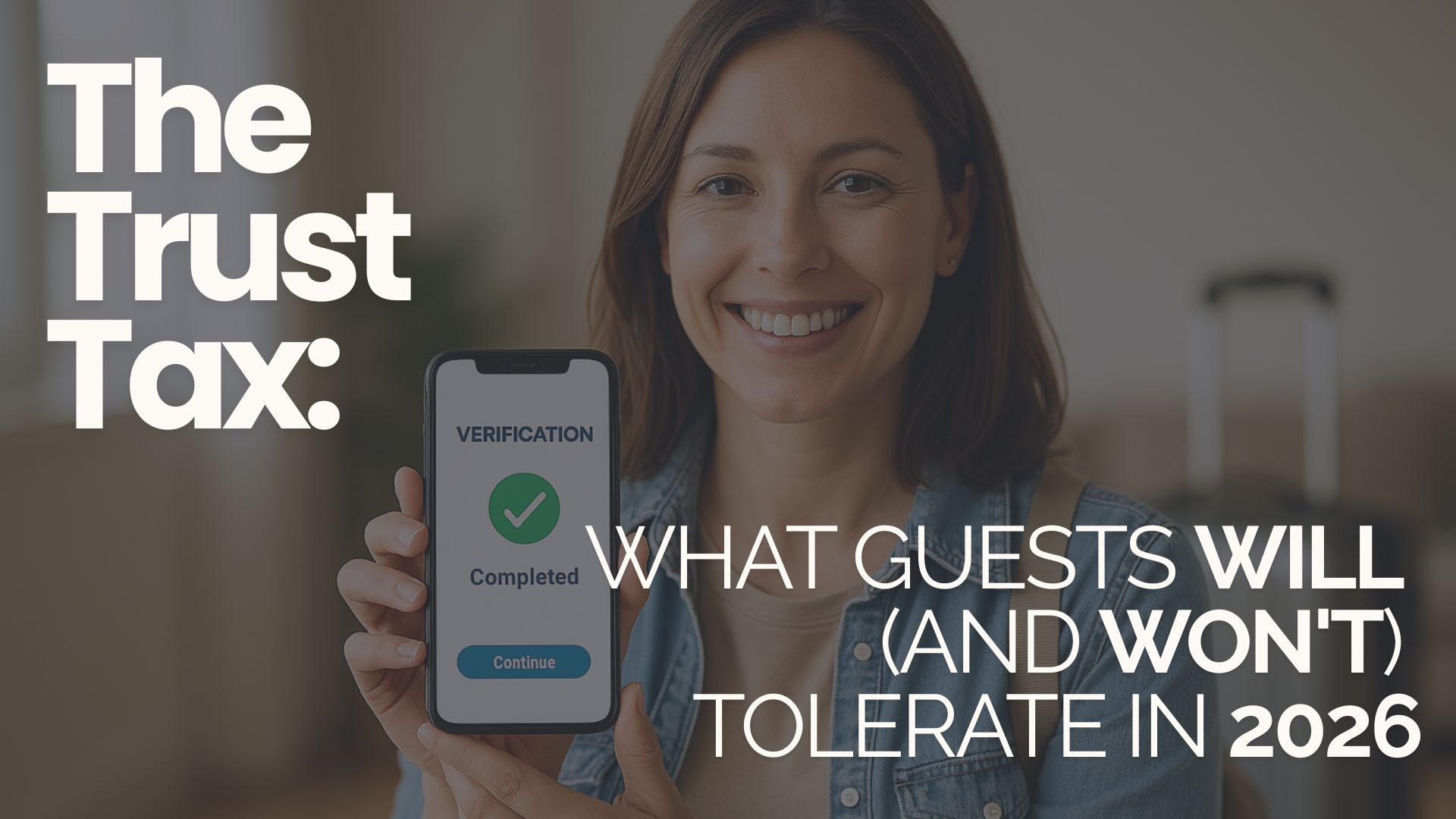
In 2020, asking for an ID felt invasive. In 2026, not asking feels negligent. What flipped the script?
Somewhere between the pandemic and now, the entire psychology around guest verification underwent a dramatic shift. What was once seen as an intrusion into privacy has become a signal of quality, a reassurance that someone is actually paying attention. For product leaders building platforms that property managers depend on, understanding this shift isn’t just interesting. It’s critical.
Because if your verification tools are still designed for 2020 sensibilities, you’re not just behind the curve, you’re actively undermining the trust your users are trying to build with their guests.
The Great Expectation Reversal
Let’s rewind. In 2020, guests bristled at verification requests. “Why do you need my ID for a vacation rental? This feels sketchy.” The friction was real, and platforms tiptoed around it, treating verification as a necessary evil that might scare away bookings.
Fast forward to 2025, and the script has completely flipped. Now, guests are asking: “You’re not verifying who’s staying here? That feels irresponsible.”
What changed? A perfect storm of cultural shifts:
The headline effect. Airbnb party houses. Scam listings. Guest-on-guest safety incidents. These stories didn’t just make the news – they rewired how people think about trust in the sharing economy.
Mainstream normalization. Fintech apps verify your identity in seconds. Airlines scan your face. Even your local coffee shop loyalty program asks for more information than some booking platforms. Digital ID checks became table stakes everywhere else, why would hospitality be different?
The AI fraud awakening. Guests now worry their own identity could be stolen or fabricated. Convincing fake IDs can be created in seconds, document forgeries are exponentially more common. Guests aren’t just worried about sketchy hosts anymore – they appreciate those looking to verify they really are who they say they are, because they know how easy it is for someone else to pretend to be them.
The trust tax is real. Guests now expect to pay a small “friction fee” in exchange for safety assurance. Verification went from being a barrier to being a signal of quality.
The New Tolerance Threshold
So what will guests actually tolerate in 2026? And more importantly, what makes them bounce?
✅ What Guests WILL Tolerate (even expect):
The modern guest isn’t anti-verification, they’re anti-hassle. They’ll accept a reasonable process as long as it feels purposeful, secure, and respectful of their time. Here’s what actually works:
- Uploading a government ID – as long as the process feels secure and the platform is transparent about data handling.
- Selfie verification – if it’s quick, intuitive, and doesn’t feel like you’re auditioning for a spy movie.
- Basic background questions – purpose of stay, number of guests, trip details. Guests get it. They’d rather answer a few questions than share a space with someone who shouldn’t be there.
- Waiting 10-15 minutes for approval – if it’s communicated well and the process is clear. But here’s the thing: cut that down to under a minute and you’ll make it an amazing guest experience. you’ll make it an amazing guest experience. Verify instantly without sacrificing accuracy? That’s what will earn all those “smoothest check-in ever” reviews.
❌ What Guests WON’T Tolerate:
On the flip side, there are deal-breakers that will send guests running, or worse, completing verification while mentally downgrading their opinion of their stay, and that’s before it even started! Here’s where you lose them:
- Clunky, multi-step processes that feel like applying for a mortgage. If verification feels harder than the actual trip planning, you’ve lost.
- Unclear data usage policies. “Where is my ID going? Who sees this? How long do you keep it?” If guests have to hunt for answers, they’ll assume the worst.
- Verification that feels like an interrogation. There’s a difference between thorough and invasive. Guests can feel it.
- Platforms that look insecure during the ID upload process. If your verification flow looks like it was built in 2015, guests will question whether their data is actually safe.
The nuance? It’s not about if you verify – it’s about how you verify. The platforms that get this right make verification feel like a part of hospitality, not a security checkpoint.
What Product Leaders Get Wrong
Here’s where things get uncomfortable. Most product leaders aren’t intentionally building bad verification. They’re just making predictable mistakes that leave their users with subpar tools.
Mistake #1: Treating verification as a “nice-to-have” feature buried in settings instead of a core trust signal their clients can be proud of and integrate seamlessly into the guest journey. If verification feels like an afterthought in your platform, your PMCs will treat it like one too – and their guests will notice.
Mistake #2: Focusing only on fraud prevention instead of positioning it as a guest safety feature that PMCs can market. The best verification isn’t just about stopping bad actors. It’s about making good guests feel safer. That’s a competitive advantage your clients can actually sell.
Mistake #3: Not communicating the “why.” Guests need to understand verification protects them, not just the host or property. If your verification flow doesn’t explain this, you’re creating friction without building trust.
What Happens Next: The 2026 Playbook
The trust economy is here, and guest expectations have permanently shifted. Verification is now table stakes. The question isn’t “Should we verify?” It’s “Are we verifying in a way that builds trust instead of breaking it?” Here’s how you approach it:
Transparency as a Feature
Clear messaging about what happens to guest data, how it’s protected, and why it matters. No jargon, no legalese, just honest communication. The platforms that excel here don’t bury their privacy policies in fine print – they make data protection a visible part of the value proposition. When guests understand exactly where their information goes and how it’s safeguarded, verification stops feeling like a risk and starts feeling like reassurance.
Speed + Simplicity
Sub-60-second verification flows with mobile-first design. The platforms that nail this aren’t just reducing friction, they’re creating delight. Every extra click, every confusing instruction, every moment of “wait, what do I do now?” chips away at trust. The best verification experiences are so smooth that guests barely register they happened. That’s not luck – it’s obsessive attention to UX and a refusal to settle for “good enough.”
Trust Signaling
Platforms that advertise their verification as a competitive advantage. “All guests verified. Grow with confidence.” This isn’t just security theater, it’s a message to PMCs that verification is a feature worth showcasing, not hiding. When platforms treat verification as a differentiator rather than a necessary evil, it changes how PMCs position their properties and how guests perceive quality. Trust becomes part of the brand, not just part of the fine print.
Adaptive Verification
Not every booking needs the same level of scrutiny. Smart platforms adjust based on risk signals, property type, and booking patterns. One-size-fits-all verification is lazy product design. A repeat guest booking a familiar property shouldn’t face the same friction as a first-time user making a last-minute reservation at a high-value listing. The platforms that understand this nuance deliver security without sacrificing experience, and their users notice the difference.
Post-Verification Value
Turning verified guests into “trusted travelers” with perks, faster future bookings, or priority access. Verification becomes a feature, not just a hurdle. When guests see tangible benefits from completing verification – whether it’s expedited future stays, loyalty rewards, or access to premium properties – the entire psychology shifts. What felt like a hoop to jump through becomes a badge of credibility they’re proud to earn.
In 2026, guest screening, done right, will be an expected functionality. Make sure your platform is ready and proud to be the one that delivers trust.
