



The Defense Paradigm Shift
Across every industry, a silent revolution is reshaping the criminal landscape. From financial services to e-commerce platforms, from healthcare systems to insurance companies, and from online dating apps to real estate platforms, AI has become the great equalizer, giving sophisticated criminal organizations and amateur bad actors alike access to tools that were unimaginable just two years ago. The hospitality industry, with its inherent trust-based ecosystem and global reach, proves particularly vulnerable to this AI-powered criminal revolution.
The uncomfortable reality is undeniable: AI has weaponized hospitality fraud, transforming opportunistic scams into industrial-scale criminal operations. Criminals now generate perfect fake IDs in minutes, create synthetic identities that never existed, and manipulate human trust with superhuman precision. What once required specialized skills, expensive equipment, and criminal networks can now be accomplished by anyone with a laptop and a $15 subscription to AI services.
The traditional response to this revelation might be to strengthen existing defenses: hire more reviewers, implement stricter policies, add more verification steps. But here’s the paradigm shift that forward-thinking tech leaders are embracing: you cannot defeat AI-powered criminals with human-powered defenses.
The same AI technology being used against your platform can become your most powerful multilayer defense for hospitality if you implement it correctly. This isn’t about replacing human judgment, it’s about giving humans superhuman capabilities to match superhuman threats.
The fundamental principle: Fight AI with AI, but do it smarter, faster, and with better data than the criminals.
The Multi-Layered AI Defense Architecture
Effective AI defense isn’t a single technology – it’s an integrated ecosystem of AI-powered tools working together in real-time. Think of it as building a digital immune system that learns, adapts, and responds to threats automatically.
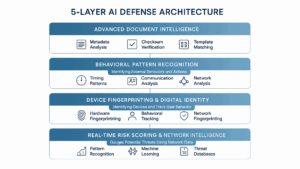
Layer 1: Advanced Document Intelligence
→ Traditional document verification asks: “Does this look like a real ID?”
→ AI-powered document intelligence asks: “Does this document’s digital DNA match its claimed authenticity?”
Beyond Visual Inspection:
- Metadata Analysis – Examining the digital fingerprint of document images, including camera settings, compression patterns, and editing history
- Checksum Verification – Validating the mathematical codes embedded in modern identity documents that AI-generated fakes often get wrong
- Template Matching – Comparing documents against databases of authentic templates, identifying subtle variations that indicate forgery
- Consistency Checking – Analyzing whether all elements of a document (fonts, spacing, security features) match the issuing authority’s specifications
Real-World Impact: While criminals can create visually perfect fake IDs, they struggle to replicate the complex digital signatures that authentic documents contain. Advanced document intelligence catches 95% of AI-generated fakes that pass visual inspection.
Layer 2: Behavioral Pattern Recognition
Humans have patterns. Criminals have different patterns. AI can spot the difference.
Booking Behavior Analysis:
- Timing Patterns – Legitimate guests book differently than fraudsters. AI identifies anomalies in booking timing, modification frequency, and communication patterns
- Device Consistency – Analyzing whether booking behavior matches claimed guest demographics and location
- Communication Style – Detecting AI-generated messages through linguistic analysis that goes beyond grammar checking
- Modification Patterns – Identifying suspicious changes to bookings that indicate fraud preparation
Network Analysis:
- Cross-Platform Intelligence – Correlating behavior across multiple platforms to identify repeat offenders using different identities
- Velocity Checking – Detecting when the same entity (person, device, or organization) attempts multiple bookings across different properties
- Geographic Consistency – Analyzing whether claimed locations match device locations, IP addresses, and booking patterns
The Autohost Advantage: With over 28 million verification events in our database, our AI has learned to identify patterns that individual platforms would never see. We can spot when a “first-time guest” is actually a repeat offender using a new synthetic identity.
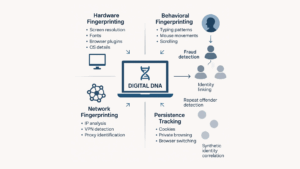
Layer 3: Device Fingerprinting and Digital Identity
Every device has a unique “digital DNA” that’s incredibly difficult to fake or change. This becomes a powerful tool for tracking bad actors across multiple identities.
Comprehensive Device Analysis:
- Hardware Fingerprinting – Screen resolution, installed fonts, browser plugins, operating system details, and hardware specifications
- Behavioral Fingerprinting – How users interact with your platform: typing patterns, mouse movements, scrolling behavior
- Network Fingerprinting – IP address analysis, VPN detection, proxy identification, and connection pattern analysis
- Persistence Tracking – Maintaining device identity even when users clear cookies, use private browsing, or switch browsers
Fraud Detection Power:
- Identity Linking – Connecting multiple fraudulent bookings to the same device, even when using different names, emails, and payment methods
- Repeat Offender Detection – Identifying banned guests attempting to return under new identities
- Synthetic Identity Correlation – Discovering when multiple “different” guests are actually the same criminal organization
Real-World Example: A device fingerprint might reveal that your “family vacation” booking is coming from the same device used for 50 other bookings this week – a clear indicator of a commercial fraud operation.
Layer 4: Real-Time Risk Scoring and Network Intelligence
The power of AI defense comes from combining multiple data sources into instant, actionable intelligence.

Multi-Signal Analysis:
- Payment Intelligence – Real-time analysis of payment patterns, chargeback likelihood, and stolen card database cross-reference
- Identity Verification – Combining document analysis, biometric matching, and liveness detection
- Behavioral Scoring – Analyzing communication patterns, booking behavior, and modification history
- Network Intelligence – Cross-referencing against databases of known threats, repeat offenders, and criminal patterns
The Network Effect: Individual platforms see only their own data. Network intelligence platforms like Autohost aggregate threat intelligence across thousands of properties, creating a shared defense system that benefits all participants.
Speed and Scale: While manual review takes 15-30 minutes per guest, AI-powered risk scoring provides comprehensive assessment in under 5 seconds. This speed isn’t just convenient, it’s essential for preventing fraud before it happens.
Layer 5: Continuous Learning and Adaptation
The most sophisticated aspect of AI defense is its ability to evolve faster than criminal tactics.
Machine Learning Evolution:
- Pattern Recognition – Continuously identifying new fraud patterns as they emerge
- False Positive Reduction – Learning from legitimate guests flagged incorrectly to improve accuracy
- Threat Intelligence Updates – Automatically incorporating new criminal tactics and defense strategies
- Behavioral Adaptation – Adjusting risk models based on changing criminal behavior and platform usage patterns
Feedback Loops: Every verification decision becomes training data that improves the system’s accuracy. Unlike static rule-based systems, AI defense gets smarter with every interaction.
The Strategic Imperative: Security as Competitive Advantage

The hospitality industry stands at an inflection point. AI has fundamentally changed the fraud landscape, creating threats that traditional security measures cannot address. But this challenge also presents an unprecedented opportunity for platform leaders who act decisively.
The Market Reality
Consumer Trust Crisis:
- 69% of consumers believe AI-powered fraud poses a greater threat than traditional identity theft
- Only 44% trust the travel industry to protect them from AI fraud
- 50% have even less confidence in vacation rental platforms specifically
Security is rapidly evolving from a compliance requirement to a competitive differentiator. But here’s what most platforms don’t realize: while AI-powered criminals have upgraded their weapons, enterprise-grade AI defense systems have evolved even faster.
Modern AI fraud prevention platforms like Autohost are enterprise-grade cybersecurity applied to hospitality. When fraudsters armed with $15 fake ID generators and basic AI tools encounter multi-layered defense systems powered by millions of verification events and real-time threat intelligence, it’s like criminals bringing a knife to a gunfight. AI defense systems have access to:
- Threat intelligence networks that span millions of properties globally
- Machine learning models trained on hospitality-specific fraud patterns
- Real-time processing capabilities that analyze thousands of risk signals in milliseconds
- Continuous adaptation systems that evolve faster than criminal tactics
The Arms Race Outcome
The arms race between AI-powered criminals and platform security isn’t theoretical, it’s happening now. Every day, criminals become more sophisticated while platforms relying on traditional defenses become more vulnerable.
The Uncomfortable Truth: If your platform uses manual review, phone verification, or basic document checking as primary fraud prevention, you’re not just behind, you’re defenseless against modern AI-powered fraud.
The Opportunity: Platforms that implement comprehensive AI-powered fraud prevention now will define the security standards for the entire industry. They’ll attract the most security-conscious users, command premium market positioning, and build sustainable competitive advantages.
The Timeline: This isn’t a problem you can address next quarter or next year. AI fraud is happening now, growing exponentially, and targeting the platforms with the weakest defenses.
The Bottom Line
The criminals have already chosen their weapons in this arms race. The platforms that choose theirs wisely won’t just survive the AI fraud epidemic, they’ll emerge stronger, more trusted, and better positioned for the future of hospitality technology.
The question isn’t whether AI will transform hospitality fraud prevention. The question is whether you’ll lead that transformation or be left behind by it.
